
Islam
Islam is one of the most important monotheistic religions in the world, with more than 1,800 million devotees, which makes it the second largest religion at a universal level. It was established in the 7th century AD. on the Bedouin promontory by the prophet Mohammad(PBUH). The lessons of Islam are found fundamentally in the Koran, the celestial book accepted by Muslims as the exact expression of God as it was revealed to Mohammad(PBUH). Furthermore, the Hadith, a collection of colloquialisms and activities of the prophet Mohammad(PBUH), constitutes a valuable source of orientation for Muslims.
History of Islam
Islam came to the landmass of the Middle East, mainly in the city of Mecca, located in present-day Saudi Arabia. The origin of Islam is firmly linked to the life and mission of the prophet Mohammad(PBUH), considered the last prophet in Islamic practice. Mohammad(PBUH) was born in the city of Mecca in the year 570 AD.
Mecca was assumed as a central role in the initial development of Islam. It was in the cave of Hira, located on the outskirts of Mecca, where Mohammad(PBUH) accepted his initial revelation of Allah through the celestial messenger Gabriel. These revelations, which continued for 23 years, were finally incorporated into the Qur’an, the blessed book of Islam.
Mecca also houses the Kaaba, a sacred construction that Muslims believe was built by the prophet Abraham and after him Ismael. The Kaaba is considered the most sacred place of Islam and is the convergence point of the Hajj journey, one of the five pillars of Islam. Mecca is the place, where Islam started.
In the early decades of Islam, Mohammad(PBUH) faced the resistance and abuse of the ruling Quraysh clan in Mecca due to his lessons on monotheism and the scrutiny of the predominant politeist beliefs. In 622 CE, Mohammad(PBUH) and his followers moved to the city of Medina, where he formed a Muslim ethnic group and continued with his main objective. This movement, known as Hégira, marks the beginning of the Islamic lunar calendar and is a great achievement in Islamic history.
Over time, Islam spread throughout the Bedouin Promontory, as well as in different areas of the planet, including North Africa, the Central East, Asia and, ultimately, Europe and more. The rapid extension of Islam following the death of Mohammad(PBUH) in 622 CE stimulated the development of an immense Islamic progress with critical social, logical and political implications.
Holy Books of Islam
that God (Allah) sent to different prophets since the beginning of time. These books contain directions and regulations for humanity. The celestial books of Allah to which reference is made in Islamic customs are:
Qurán: Qurán is considered as the most important and final revelation of Islam. It is accepted that this is the strict expression of God revealed to the Prophet Mohammad(PBUH) through the Holy angel Gabriel. The Qur’an serves as a definitive aid for Muslims, as it contains regulations, moral lessons, and direction in all aspects of life.
The Torá (Taurat): It is accepted that the Torá was delivered to the Prophet Moses (Musa) and is considered one of the Books of Allah in Islamic customs. Contains instructions and regulations for the descendants of Israel.
The Psalms (Zabur): The Songs are attributed to the Prophet David (Dawud) and are considered one of the Books of Allah in Islam. Contains profound praise, petitions, and lessons.
The Gospel (Injil): If you accept that the Gospel was given to the Prophet Jesus (Isa) and consider it one of the Books of Allah. It contains the lessons of Jesus and is considered a direction for Christians.
Islam as symbol
As a religion, Islam does not have a single, universally seen image like some other religions (for example, the cross in Christianity or the Star of David in Judaism). However, there are some images and themes related to Islam that are commonly used to address trust or its different perspectives. Here are the most important Islamic images of all and their implications:
Star and Sickle: This is a commonly seen image, often associated with Islam, but it is far from an authoritative symbol of the religion. The star and crescent have social and verifiable meanings in some Muslim-majority areas.
Islamic Calligraphy: Arabic calligraphy is highly regarded in Islamic craftsmanship and culture. Quranic refrains and other strict texts are often written in intricate and beautiful calligraphy. The word compound is a powerful image in Islam, especially when referring to Allah or the Prophet Muhammad.
The Kaaba: Located in the city of Mecca, Saudi Arabia, the Kaaba is a 3D square structure that serves as the focal point of Masjid al-Haram. It is the holiest place in Islam and it is the same path (qibla) that Muslims from all over the world take during their daily prayers.
The Qur’an: Although it is not a visual image, the Quran is the heavenly book of Islam and holds immense importance for trust. His lessons and articles are vital to Muslim beliefs and practices.
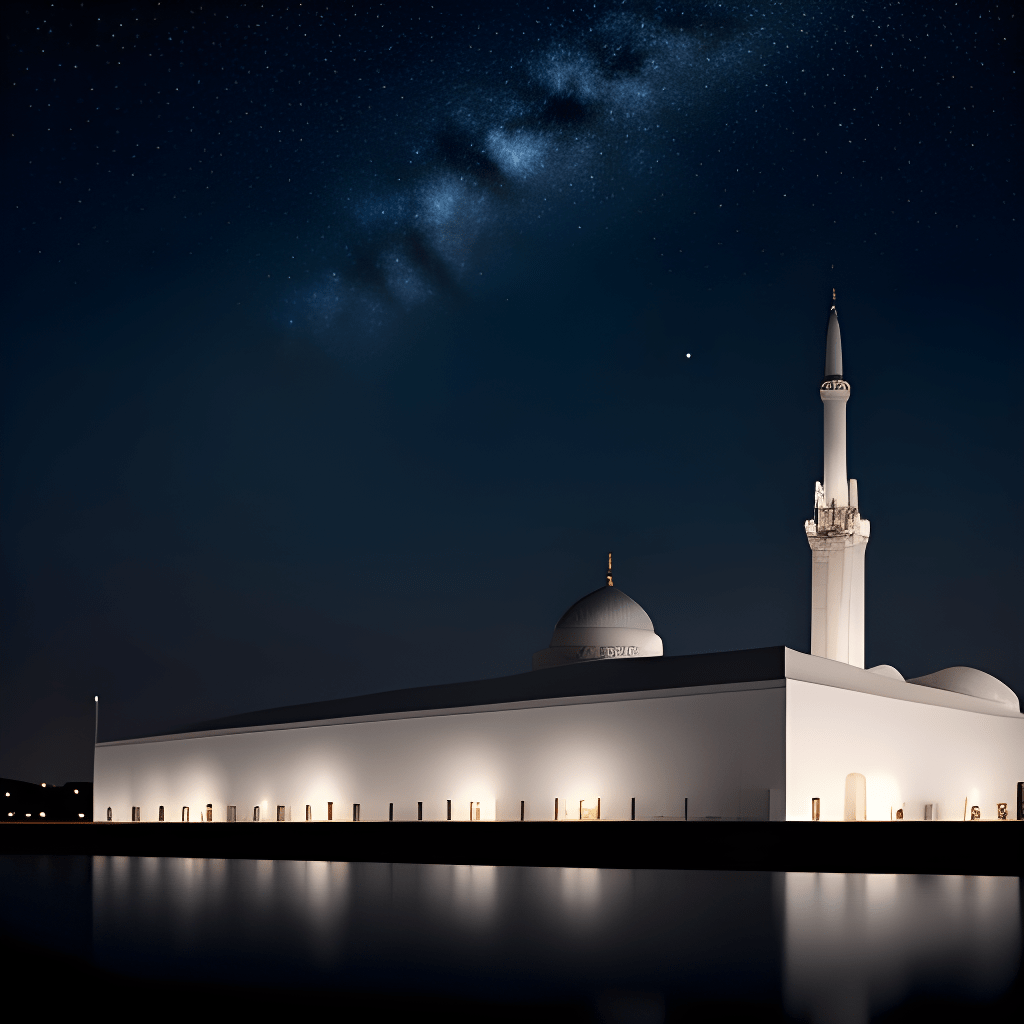
The Mosque: Mosques are places of love for Muslims and their engineering designs often integrate components such as minarets and arches. The outline of a mosque can represent the presence of Islam.
The Rule of Darkness: In general, darkness is associated with various Islamic developments and substances. It is far from a widespread image, but it has been used by different groups at different times.
The five-pointed star: is sometimes used to refer to the five pillars of Islam, which are the core beliefs and practices that all Muslims must follow.
The date palm tree: It represents the garden of the desert and represents life in the arid desert of the Bedouin continent. It is also mentioned in the Quran.
Name of Allah (الله): The Arabic content of “Allah” is a huge image in Islamic culture. He addresses the one true Lord of Islam.
It is important to note that although these images may be linked to Islam, the current religion emphasizes love for God alone (Allah) and avoids excessive reverence. Therefore, Islamic crafts and culture often use mathematical examples, calligraphy, and other non-descriptive forms to avoid the love of images or symbols. Similarly, the use and meaning of images can vary between different Islamic societies and customs.
Muslim religion Beliefs:
Monotheism (Tawhid): The central belief in Islam is the absolute monotheism of God (Allah in Arabic). Muslims accept that there is only one God and that He is special, indissoluble, and all-powerful.
Prophets and Messengers (Risalah): Muslims accept that God sent messengers and prophets from the beginning of time to guide humanity. Muhammad is considered the last prophet who received the Quran as the final revelation.
The Quran: Muslims accept the Quran as the exact revelation of God as revealed to the Prophet Muhammad. It serves as the ultimate source of guidance for all areas of life.
Holy Messengers (Mala’ika): Muslims rely on the presence of holy messengers, who are otherworldly creatures created by God to carry out his orders.
Judgment Day(Qiyamah): Muslims believe in the Day of Judgment, where everyone will be resurrected and held accountable for their actions. Those who lived will receive fair compensation and those who lived in rebellion will face the consequences.
Destiny (Qadar): Muslims give importance to God’s will and heavenly destiny. Everything that happens on the planet has a relatively small impact, but people are completely free and responsible for their actions.
exercises (Ibadah):
Supplication (Salat): Muslims are expected to make five supplications every day in front of the Kaaba in Mecca. These requests are an immediate connection between the individual and God and serve as a means to seek guidance and give thanks.
Fasting (Sawm): Muslims fast during the long stretch of Ramadan, swearing food, drink, and various exercises from first light until dusk. This is a period of deep reflection, self-control, and greater commitment.
A noble cause (zakat): Muslims are determined to give a portion of their abundance to the less fortunate. This type of almsgiving, called zakat, is one of the five pillars of Islam.
Pilgrimage (Hajj): Muslims who are truly financially capable are expected to make a pilgrimage to the heavenly city of Mecca at least once in their lifetime. This journey is called Hajj and is one of the five major pilgrimages of Islam.
Quran Recitation (Tilawah): It is recommended that Muslims study and discuss the Quran regularly to gain in-depth knowledge and guidance.
Gestures of Kindness and Good Cause (Sadaqah): After obligatory zakat, Muslims are encouraged to engage in acts of noble cause and meditation to help the less fortunate.
Islamic Law (Fiqh): Muslims follow a legal and moral code called Sharia, which covers various parts of life, including diet, dress, cleanliness, and moral leadership. These convictions and practices vary among different factions and ways of thinking within Islam, but the basic standards of monotheism, supplication, good cause, fasting, and pilgrimage are common to Muslims and serve to help them continue a faithful life. and honorable.
Islam_Sunni muslim beliefs
Sunni Islam is one of the two prominent parts of Islam, the other being Shia Islam. Sunni Muslims adhere to many beliefs and practices in light of the teachings of the prophet Muhammad and the Quran. Although there is diversity within Sunni Islam, there is a central conviction that is generally shared by Sunni Muslims. Below are some key beliefs and practices of Sunni Islam:
Tawhid (monotheism): Sunni Muslims, like all Muslims, believe in the absolute unity of God (Allah). Tawhid is the central philosophical idea of Islam, which emphasizes trust in the extraordinary, all-powerful, and forgiving God.
Prophet Muhammad: Sunni Muslims accept that Muhammad is the last prophet and messenger of God and decided to transmit the Quran, the heavenly book of Islam, to humanity. They follow his lessons and consider him a model of honest living.
The Quran: Sunni Muslims accept that the Quran is the strict revelation of God as revealed to Muhammad over 23 years ago. They consider it a definitive source of guidance for all areas of life, including confidence, deep quality, and leadership.
The Six Statements of Faith (Aqidah): Sunni Islam adheres to six essential convictions, known as the “Six Statements of Faith”:
Faith in Allah: Trust in the only true God.
Trust in the holy messengers: Affirmation of the presence of the holy messengers as deep creatures made by God.
Belief in the Divine Books: Recognition of the heavenly blessed books revealed by God to the various prophets, including the Quran.
Belief in the Prophets: Belief in all the prophets, Muhammad being the last.
Belief in Judgment Day: Belief in resurrection and final judgment when everyone will be held accountable for their actions.
Faith in Destiny (Qadar): Conviction that God foresees everything, including human activities, but people have freedom of thought.
It is necessary to note that there are different ways of thinking within Sunni Islam (e.g. Hanafi, Maliki, Shafi’i, Hanbali), and there may be small philosophical contrasts between them. However, these basic convictions mentioned above are largely shared by all Sunni Muslims. Furthermore, Sunni Islam comprises the majority of the Muslim population worldwide, and its adherents represent a wide range of social and local diversity.
Islamic sayings
Islam has a rich tradition of sayings, lessons, and sayings that reflect its deep moral and ethical standards. These sayings are often attributed to the prophet Muhammad or taken from the Quran. Following are some notable Islamic collegiates:
“La ilaha illallah, Muhammadur Rasulullah”: This is the honest Shahada, the Islamic proclamation, and it means “There is no god but Allah, and Muhammad is the messenger of Allah.” It is the central doctrine of Islam.
“Bismillahir Rahmanir Rahim”–: This phrase, often discussed before beginning any task, means “for the love of Allah, the Most Thoughtful, the Most Compassionate.”
“Allahu Akbar”–: Meaning “Allah is the best,” this phrase is commonly uttered by Muslims in a variety of settings, including during supplications and to express gratitude or surprise.
“Inna ma’al usri yusra”: This part of the Qur’an (94:6) means “No doubt, do not sweat.” He underlines his conviction that difficulties are reflected in images of help and simplicity.
“To whom it is given, it will be greatly needed”: This idiom emphasizes the importance of obligation and responsibility for those who have been honored with goods and information.
“Your favorite people are the right people for their families”: This expression shows the meaning of grace, love, and attention to family members.
“Pursue knowledge from the cradle to the grave”: This maxim emphasizes the importance of continuous learning and the pursuit of information throughout life.
“Goal-determining activities”: This hadith highlights the importance of authenticity in one’s activities. It implies that the value of an action depends on the objective pursued.
“Try not to exploit it”: Controlling anger is a virtue in Islam, and this refrain encourages perseverance and restraint despite provocation.
“The tough person is not the one who can fight someone, but the one who has some control over himself when he is angry”: This shows the importance of self-control and inner strength.
“Evaluate yourself before you are judged”–: This saying supports self-reflection and personal growth in actions and character.
“The ink of researchers is holier than the blood of saints”: This shows the value of knowledge and endowment in Islam and its commitment to the betterment of society.
“The best among you are the people who adapt to their neighbors”: This expression shows the importance of being kind and helpful to neighbors, regardless of their trust.
These discussions and lessons address the deep moral qualities that guide the lives of Muslims and their relationships with others. They serve as a source of cunning and direction in various aspects of life, from individual leadership to social duty.
Conclusion
It is important to note that there are many Islamic beliefs and practices and that not all Muslims may adhere to similar beliefs or practices. Furthermore, Islam has a rich history and has made great promises in various fields, including science, mathematics, reasoning, and engineering.
Islam is a diverse and complex religion that fundamentally affects the history and culture of the world. By understanding their beliefs and practices, we can overcome ignorance and prejudice and promote harmony and understanding among all.